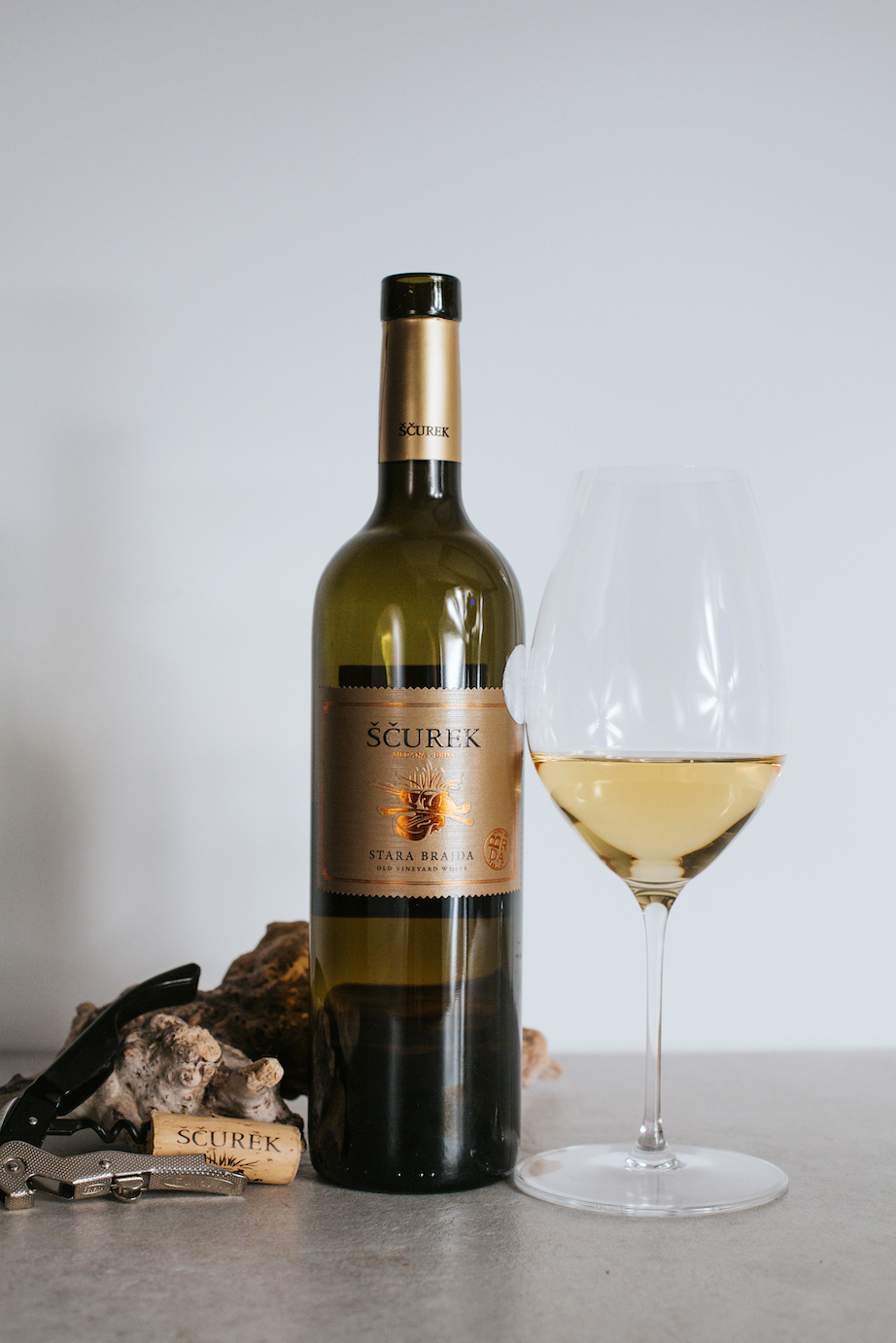
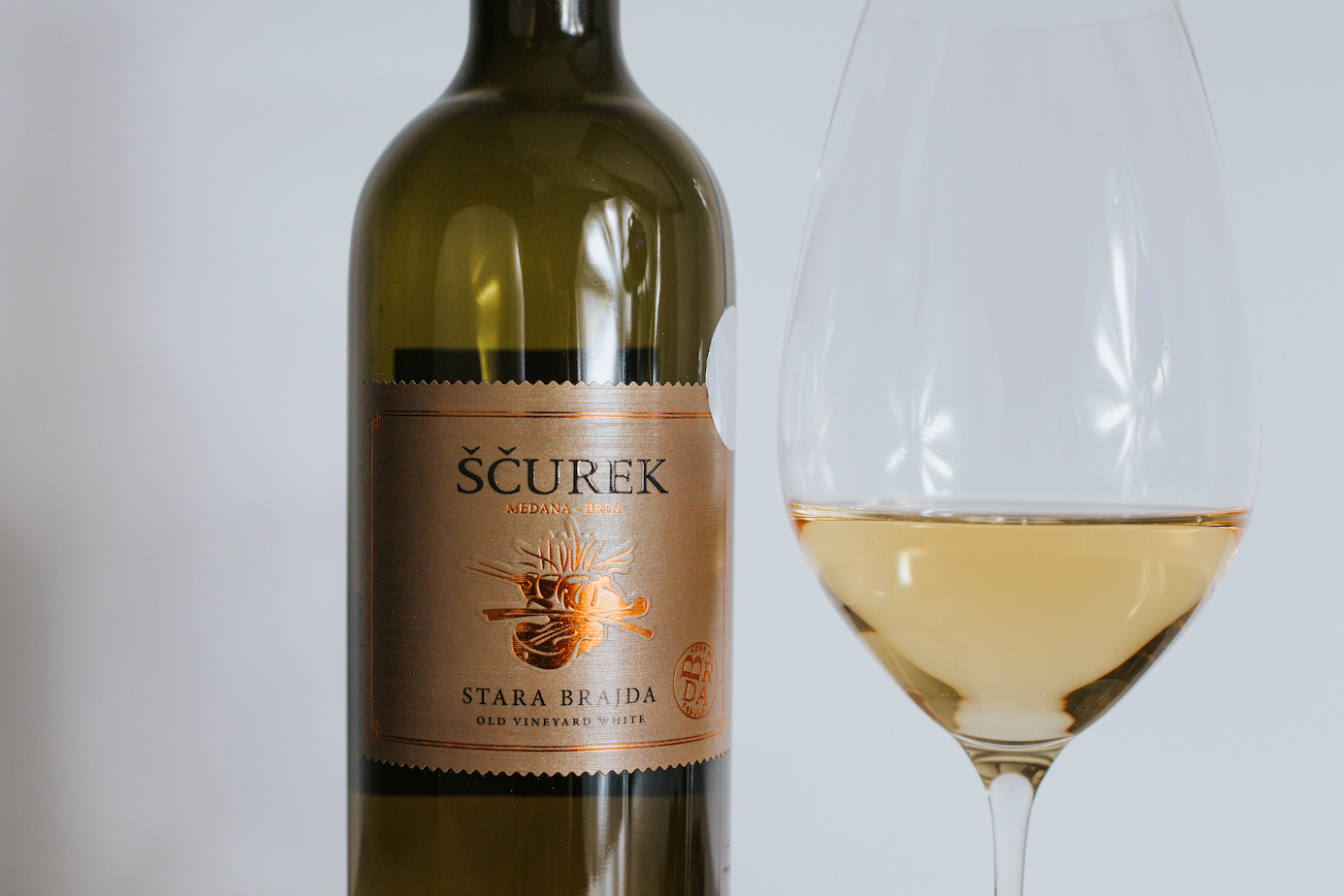
Let’s look at one of the iconic wines from Brda today. This one was among the first iconic white blends that contributed to the greatness of modern Brda winemaking. We’re at Ščurek, sipping a glass of Stara Brajda white. A wine of excellence…
This was the first white blend of Ščurek wines that matured in oak barrels. Keep in mind that the first vintage to see the light of day under Stara brajda white was 1995, while 1994 was the first vintage of Stara brajda red. It was a deviation from the standard white blend produced with fermentation in stainless vats that it became a legit icon quickly.
Stara brajda white is a cuvée that doesn’t follow a constant share of blends, the focus is to express the variety that gave the best results in the vintage, and in 2016 this was Rebula. So in this blend, you’ll find 50 % Rebula, 15 % of Malvasia and Sauvignon vert, 10 % of Picolit and the rest of Glera and Pika.
Grapes are harvested from the vineyard Grotišče, planted at south-facing slopes, at an altitude between 100 and 180 meters above sea level. Naturally in Brda’s own Opoka soil, with vines counting up to fifty-four years.
Stylistically the wine has seen its fair share of evolution. It was starting as exclusively a wine produced in new barriques, to a wine produced in 500-litre oak barrels and finally to a wine that sees mostly large, 2.000-litre oak vats. The goal, to express the best the terroir is giving by not overpowering it with oak. As Tomaž advocates, and as someone who believes in impacting new dimensions to wines by blending it with the advantages of different varieties.
Grapes are hand-harvested exclusively. Picolit, Glera, Pika and rebula at the same time, followed by Malvasia and Sauvignon vert. Wines are vinified separately with a twenty-four-hour maceration, then matured for two years in large oak vats, and finally assembled to form the final wine.
Stara Brajda shows a deep golden yellow colour. It shines brightly, with a thick, expressive texture.
Its bouquet is luxurious. It reveals aromas of overripe fruit, pineapple, papaya, apple slices, quince, gooseberry, candied orange, toffee, caramel, vanilla, coconut, almonds, cedar, and musk.
The taste feels soft, with well-integrated alcohol in the structure. Freshness is crisp with perceptible tannins and minerally salty—a wine of intensity and persistency, full-bodied with a lasting and elegant persistency.
A wine that can be drunk now, but it will be even better in seven years. A bottle will cost you approximately 20 Eur, and you can order it at eVino, Koželj, Mabat-int, Vinoteka Sodček, Deliz, Faladur, Vinoo.co, Be.Wines, Zagriz, Vinissimus, Italvinus and Ochutnejte Slovinsko.
Restavracija Strelec has been a beacon of Ljubljana's gastronomic scene since its opening in December…
Eating at Alla Luna feels like a delightful time travel into one of Gorizia's most…
The new chapter of the beneficiary auction of selected wines of the Gorizia county will…
Variety: 100% Vermentino Vintage: 2024 Sugar content: dry Alcohol content: 12.5% Wine region: Tuscany Wine…
And they prepare it à table (tableside)! A must-see feast for the eye, a must-try,…
Variety: 60% Tocai Friulano, 30% Malvasia Istriana, 10% Ribolla Gialla Vintage: 2023 Sugar content: dry…